Being a carer is by far the hardest thing I’ve ever done. And it’s also been one of the best experiences of my life.
My mum and I always had a difficult relationship, and for some years we didn’t have any contact. After she had a cardiac arrest, my husband helped me to begin spending short periods of time with her.
I then went travelling for a year. When I came back, I realised she wasn’t well, and soon afterwards she was diagnosed with cancer. I had some savings, which meant I could spend time being her full-time carer.
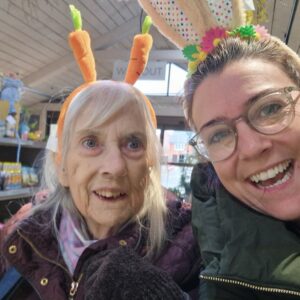
Being Mum’s carer was really lovely. Somehow, her illness gave us both permission to let go. I’d never seen her laugh, joke or be silly before. Instead of rubbing up against each other, we could be playful and childish.
When everything in your life is volatile, Carers Leeds provides some stability. I felt safe and held.
I’m not going to lie—it was also rock-solid hard. You’re always on duty, even when you’re not staying in the same house. She would call me repeatedly through the night. Cups of tea were always too hot or too cold.
I had to advocate for her with service providers and paid carers. Nothing was joined up and, sadly, services weren’t always person-centred.
During this time, I started a new job. Thankfully, my employer was very flexible from day one, but I was still juggling work with everything else.
I worked hard to keep my patience, but I was exhausted and depleted. At times, I felt guilty or worried that I’d done a really bad job.
The GP signposted me to Carers Leeds, and the process worked really well. I was told about the different ways they could support me and agreed a time for a call back.
After taking some time to think, I had sessions with a member of staff and attended a group. After Mum died, I also met with a bereavement worker.
People always rang when they said they would. I was kept informed, and the calls were never cancelled. When everything in your life is volatile, Carers Leeds provides some stability. I felt safe and held.
Carers Leeds gave me so many practical suggestions about looking after myself, my rights, how services should work, money and taking time out.
I was encouraged to apply for a grant, which allowed me to buy a slow cooker, an air fryer, a hot-water bottle and an electric blanket. Staying warm and fed still makes a difference. When I can, I pass on what I’ve learned to other people.
In the group sessions, you don’t have to explain yourself. I was probably the youngest person there, but we always found common ground. It was comforting to share similar experiences.
Carers Leeds staff are really genuine. When I was asked how I was that day or offered a hug, it was sincere. When you’re a carer and someone gives you a hug, it’s enormous.
I’ve got great friends, but they can’t always understand—and really, you just want to be “normal” with your friends. It can be exhausting just explaining how tiring it is to be a carer. Carers Leeds was a lifeline.
I know I’ve been in survival mode. In the course of a year, both my parents died, I got divorced, started a new job and bought a house.
I’ve learned some amazing things about myself. Something that stayed with me was the idea that we should do things out of love, not fear. I now know it’s possible to feel deeply sad and really happy at the same time.
When you’re a carer, you lose a little of your identity. When the person you care for dies, you lose your caring identity too.
I know I’m a climber, a gardener, a dog servant and a good friend—but I’m not a daughter, wife or mother. I’m not really sure who I am at the moment.
In the past, I saw caring as a duty—something I wouldn’t want to take on. But during her final months, my mum and I were able to show each other that we loved one another.
I’d do it all again in a heartbeat.